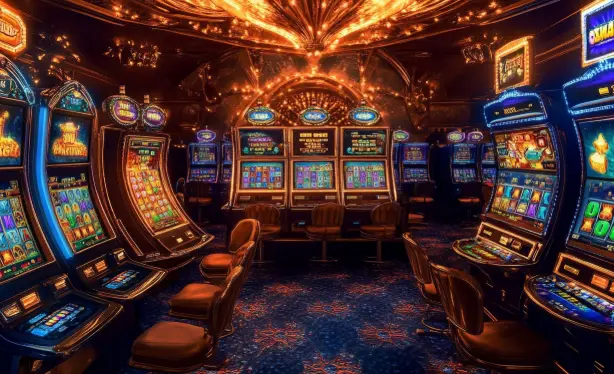
South Carolina Casino Cruise: How Do You Board?
Boarding a South Carolina casino cruise is not a stroll onto a floating slot floor. The state's gambling vessel loophole is a narrow, legally fragile corridor, and the boarding process is engineered around a single brutal requirement: the ship must hit international waters before a single card is dealt. If you think you can just walk up to a dock in Myrtle Beach or Charleston and flash an ID, you are already wrong. The entire South Carolina casino cruise boarding protocol is a three-layer filter designed to keep regulators, coast guard inspectors, and undercover agents from shutting the operation down before the first hand of blackjack.

The Terminal Is a Legal Kill Zone
Every South Carolina casino cruise boarding starts at a private terminal, not a public marina. These terminals are leased under shell LLCs, usually tied to a hospitality group that also owns a dinner cruise or fishing charter. Why? Because the moment you step onto their property, you are on private land, and the operator can enforce a stricter ID and manifest check than any public dock allows. The boarding manifest is not a courtesy. It is a legal shield. If the vessel is boarded by state law enforcement within the three-mile territorial limit, the captain must prove every passenger was documented, ticketed, and logged before the ship left the berth. Any gap in that manifest is a misdemeanor with a fast track to a felony if cash handling is involved. That is why you will be asked for a government-issued photo ID twice: once at the gate, once at the gangway. The second check is not redundancy. It is a chain-of-custody verification for the manifest.
Timing Is Everything and Most People Blow It
South Carolina casino cruise boarding windows are brutally tight. The vessel does not wait for late arrivals. It cannot. The captain has a legal obligation to clear the three-mile state limit within a specific time frame to justify the gambling activity under federal law. If the ship is delayed at the dock, the entire cruise becomes a liability. Most operators enforce a 45-minute boarding window that closes 15 minutes before departure. Miss it, and you are not just missing a boat. You are missing a federally protected gambling window that only exists because the vessel is moving. The coast guard does not care about your traffic jam. The terminal staff will not reopen the gangway. They will, however, refund your ticket minus a processing fee that is buried in the terms of service. That fee is not a penalty. It is a calculated deterrent to keep the manifest clean and the boarding process fast.

The Manifest and the Cash Cage
Once you are through the gangway, the boarding process shifts from document check to financial capture. The cash cage is not a bank. It is a cage with a dual-control lock, a camera system that records every bill, and a pit boss who watches the manifest count in real time. You cannot buy chips with a credit card on a South Carolina casino cruise. Federal law prohibits it. You cannot use an ATM on board. The machines are disabled until the ship crosses into international waters. This is not a technical glitch. It is a compliance feature. The entire South Carolina casino cruise boarding model is built around the idea that money changes hands only when the vessel is legally outside state jurisdiction. The cash cage opens when the captain announces the three-mile mark. Not a second before. If you try to buy chips early, the dealer will refuse. If you push, security will escort you to a seating area and flag your ticket for review. That flag goes into a shared database that every operator in the region uses. One violation, and you are quietly banned from every casino cruise out of South Carolina.
The Return Boarding Is Worse Than the Departure
Boarding back onto the dock is where most first-timers get caught off guard. The ship does not dock and release. It docks, holds, and processes. Customs and Border Protection does not board every cruise, but when they do, the entire vessel is frozen until every passenger is matched against the manifest. If you switched seats, lost your ticket, or gave a fake name at the gate, you are now a discrepancy. Discrepancies trigger a secondary screening that can take two hours. The smart play is simple: keep your ticket visible, stay in your assigned seating zone during the final 30 minutes, and do not attempt to disembark before the captain gives the all-clear. The return boarding is not about gambling. It is about proving the cruise was legal from start to finish. That proof is the only thing keeping the entire South Carolina casino cruise industry afloat. 🎰