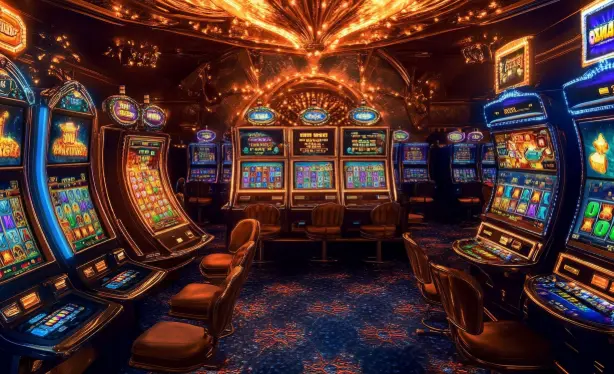
The Convergence of Decentralized Finance and Live Dealer Gaming
The digital entertainment landscape is undergoing a seismic shift. Traditional online gambling platforms are rapidly integrating blockchain technology, giving rise to a new paradigm: Live Casino DeFi. This fusion represents more than a fleeting trend; it is a fundamental restructuring of trust, transparency, and transactional efficiency within the iGaming sector. 🎲 Players are no longer satisfied with opaque random number generators (RNGs) and delayed withdrawal processes. They demand verifiable fairness and instant liquidity, principles that decentralized finance protocols provide natively.

Understanding the Core Mechanics of Decentralized Live Wagering
At its technical core, a Live Casino DeFi platform operates on a hybrid architecture. The video feed originates from a physical studio, streamed via low-latency protocols to ensure real-time interaction with human dealers. However, the wagering layer, settlement logic, and custody of funds reside entirely on-chain. Smart contracts escrow player bets and execute payouts automatically upon the dealer's outcome resolution. This eliminates counterparty risk—the historical Achilles' heel of online casinos. For the savvy bettor, this means every hand of blackjack or spin of roulette is governed by immutable code, not corporate policy. The integration of stablecoins like USDC and USDT further mitigates volatility, allowing precise bankroll management without exposure to speculative asset fluctuations.

Provably Fair Algorithms and On-Chain Transparency
Professional players prioritize verifiability above all else. In the DeFi live casino context, "provably fair" takes on a literal, cryptographic meaning. Each game round generates a cryptographic seed. The casino hashes this seed before the round begins. After the result, the player can verify that the hash matches the revealed seed. This mathematical proof ensures the house cannot alter outcomes post-hoc. Furthermore, all transaction histories are recorded on public ledgers. Unlike traditional platforms where internal audits are private, DeFi protocols allow any user to inspect the smart contract's liquidity pools and payout ratios. This radical transparency fosters a level of trust unattainable in legacy systems. 🃏 High rollers can audit the exact solvency of the liquidity pool backing their high-stakes baccarat table in real-time.
Liquidity Provision and Yield Generation for Players
A unique economic primitive emerges in this niche: player-as-liquidity-provider. In advanced Live Casino DeFi ecosystems, users can stake assets into the casino's bankroll pool. By doing so, they become the "house," earning a proportional share of the theoretical win (the house edge) distributed as yield. This flips the traditional adversarial dynamic. Instead of competing against the casino, participants can hedge their gameplay by simultaneously holding a stake in the house's profitability. This dual role—gambler and shareholder—creates sophisticated risk-mitigation strategies. Yield rates are algorithmically adjusted based on the total volume wagered and the current exposure of the bankroll, offering dynamic returns that often dwarf traditional staking rewards.
Regulatory Ambiguity and Operational Resilience
The jurisdictional landscape for decentralized wagering remains fragmented. While some nations embrace the technology as a tool for consumer protection through transparency, others view it as a challenge to established gambling monopolies. Operators must navigate a complex web of KYC (Know Your Customer) and AML (Anti-Money Laundering) requirements. Many DeFi casinos implement tiered access: non-KYC for low-limit play using privacy-focused wallets, and full KYC for high-limit tables requiring fiat on-ramps. This adaptive compliance model allows the ecosystem to function globally. The resilience of these platforms is noteworthy; because they lack a central server holding funds, they are immune to traditional seizure tactics. The code is law, and the liquidity is distributed across thousands of nodes worldwide. 🌐
The Future Trajectory of Immersive Decentralized Gaming
Looking ahead, the integration of VR (Virtual Reality) and AR (Augmented Reality) with blockchain settlement will redefine immersion. Imagine a photorealistic metaverse casino where your avatar sits at a table, but the chips are NFTs (Non-Fungible Tokens) with verifiable scarcity, and the dealer is a decentralized autonomous organization (DAO) employee. The convergence of AI-driven dealers with zero-knowledge proofs will further enhance privacy and speed. The friction between fiat and crypto on-ramps is dissolving, paving the way for mass adoption. For the institutional investor and the casual player alike, the proposition is compelling: a mathematically fair, instantly settled, and financially empowering gaming environment that operates beyond the constraints of traditional banking hours or geographic borders.